The art of eight limbs.
Muay Thai
in Dubai
Thailand's national sport, trained in Barsha Heights. Punches, kicks, knees, elbows, and clinch — the most complete striking art on the planet.
About Muay Thai at Red Gym
Thailand's most exported martial art.
Muay Thai is called the art of eight limbs because it uses fists, elbows, knees, and shins as offensive weapons — eight contact points compared to boxing's two. It is Thailand's national sport, deeply tied to the country's cultural identity, and over the last 30 years it has become the dominant striking art in modern combat sports including MMA, kickboxing, and self-defense.
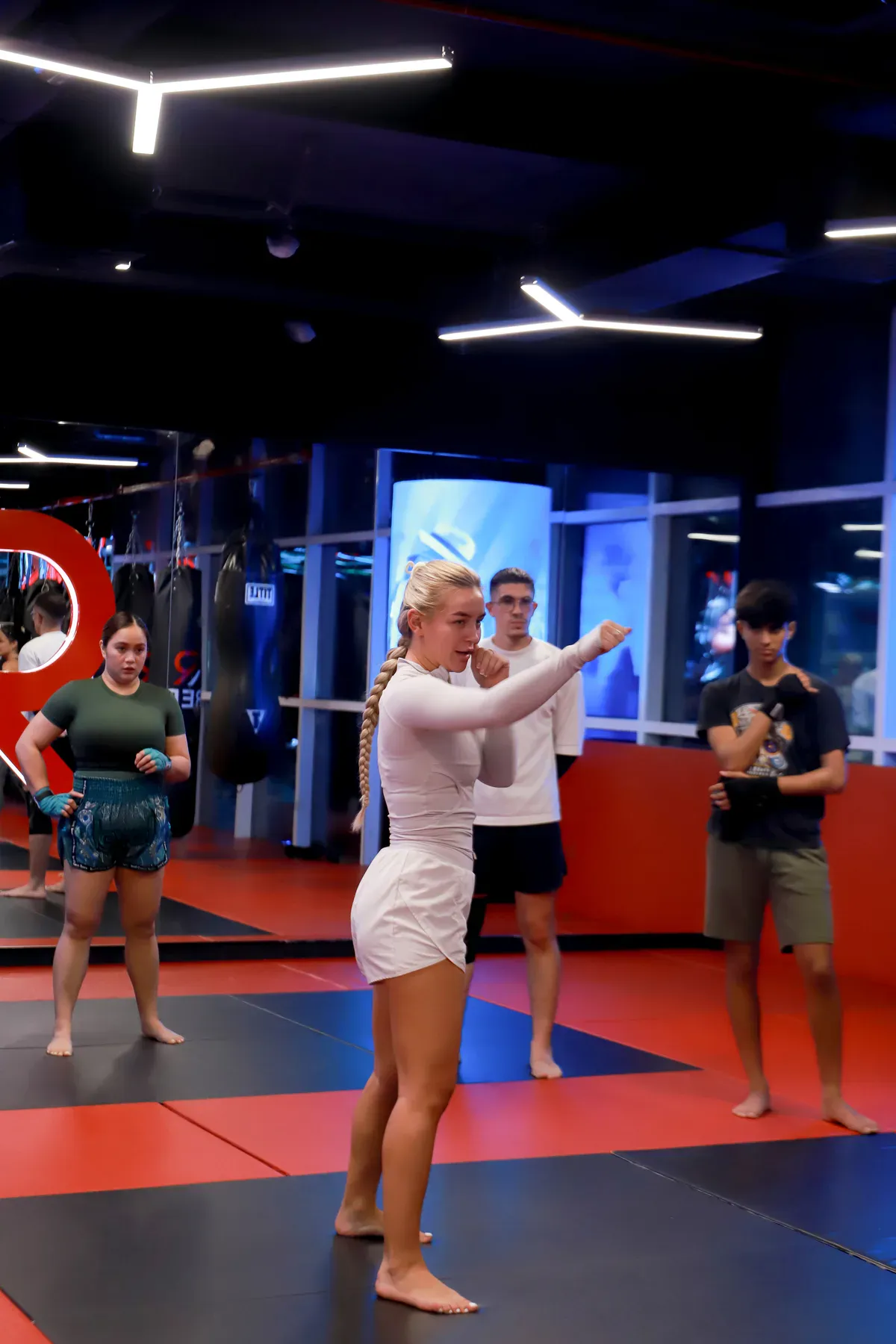
At Red Gym in Dubai, we run a serious Muay Thai program with daily classes for all levels. Beginners start with stance, the teep (push kick), and basic combinations. Intermediate students develop their roundhouse kicks, clinch entries, and elbow techniques. Competitive fighters refine timing, ring craft, and conditioning for amateur and professional bouts.
What sets Muay Thai apart from other striking arts is the clinch — the upright grappling position where fighters control each other's posture and exchange knees and elbows. The Muay Thai clinch is one of the most technically deep aspects of the sport, and it's a major reason Muay Thai dominates standup grappling exchanges in MMA.
What you'll learn
Eight weapons. Slowly mastered.
Muay Thai technique is built in layers. Beginners spend their first few months on stance, basic kicks, and conditioning. Intermediate students develop combinations and clinch work. Advanced students refine timing, set-ups, and ring craft. Here's the breakdown:
Stance & footwork
The Muay Thai stance is squarer than boxing — designed for kicking. Footwork is more measured, with deliberate steps and angle changes.
Punches (Mahd)
Boxing-style punches adapted for Muay Thai range — jab, cross, hooks, uppercuts, plus the spinning back fist used at higher levels.
Kicks (Te)
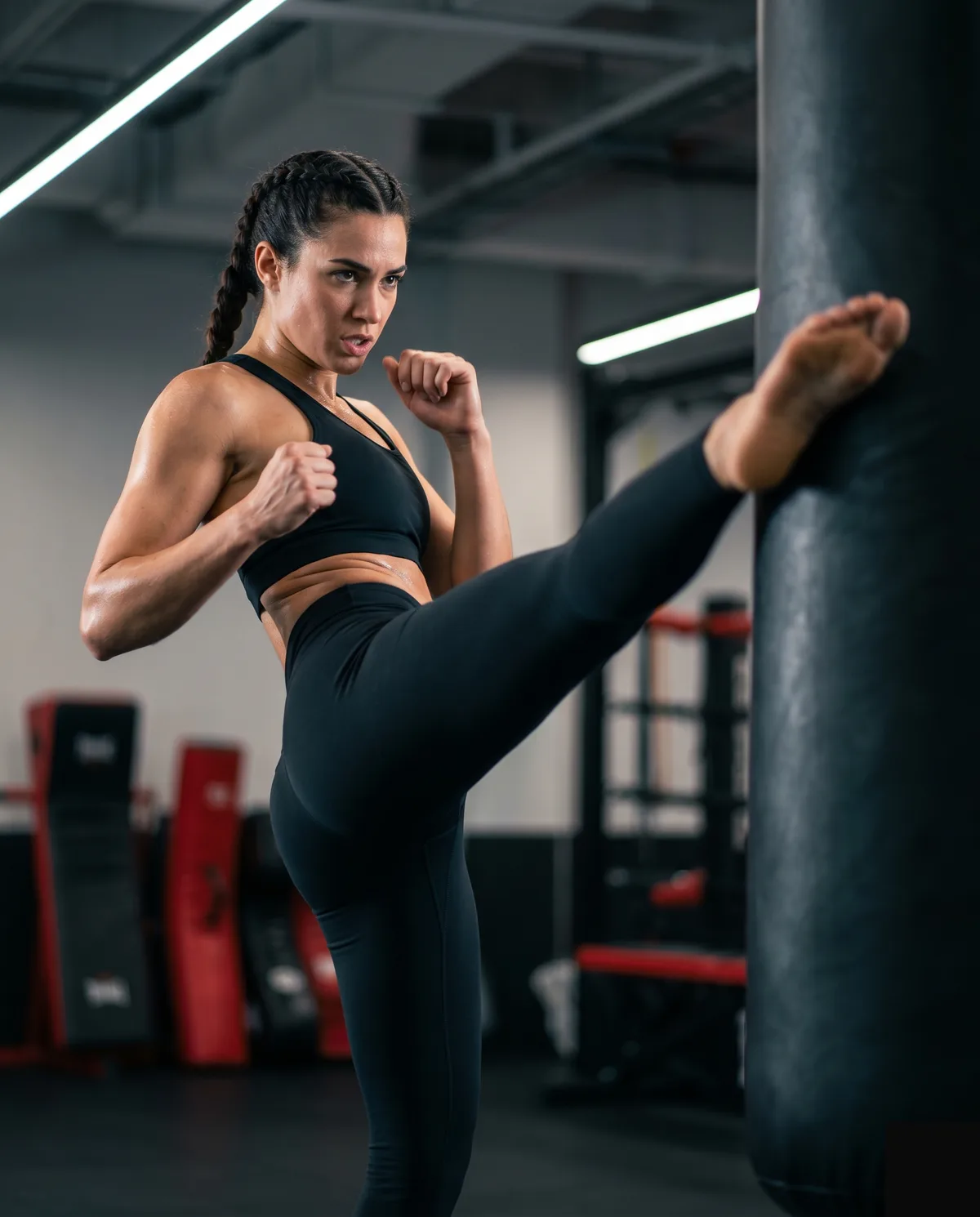
The roundhouse (te tat), teep/push kick (te trong), question-mark kick, axe kick, and the brutal low kick that targets the thigh.
Knees (Khao)
Straight knees, diagonal knees, jumping knees, flying knees. Used at long range, in the clinch, and as fight-finishers.
Elbows (Sok)
Horizontal, diagonal, uppercut, slashing, and spinning elbows. Deadly at close range — the reason cuts are common in Muay Thai bouts.
Clinch (Chap Kho)
Upright neck-and-head wrestling. The technical heart of high-level Muay Thai — controlling posture to deliver knees and short elbows.
Why train Muay Thai here
Real bags. Real pads. Real coaches.
Most Dubai gyms that offer Muay Thai are really running boxing-cardio classes with a few kicks thrown in. The pads are wrong, the coaches haven't trained in Thailand, and the kicks taught are anatomically improper — leading to shin injuries within weeks.
Red Gym takes Muay Thai seriously. We have proper Thai pads (the long curved ones, not boxing focus mitts), Thai-style heavy bags, and coaches who teach the authentic technique used in Thailand. The roundhouse you learn here is the one a Lumpinee Stadium fighter would recognize.
Our location in Vista Tower, Al Thuraya Street, Barsha Heights makes us accessible from Marina, JLT, Greens, Internet City, and Media City. Free Vista Tower parking removes the typical Dubai gym friction. Daily classes mean you can train consistently — and consistency is what produces real Muay Thai.
Class schedule
Muay Thai runs daily.
Daily Muay Thai classes covering beginner fundamentals, intermediate combinations, advanced technique, and clinch sessions. Pad work blocks and bag work blocks alternate through the week. Sparring is invite-only and coach-supervised, with mandatory protective gear.
Get this week's scheduleWho teaches
Coaches with Thailand training time.
Several of our Muay Thai coaches have spent significant time training in Thailand — weeks to months at Lumpinee-tier gyms in Bangkok, Phuket, or Chiang Mai. The technical differences between Thailand-trained coaches and self-taught Muay Thai instructors are night-and-day.
Beyond Thailand exposure, our coaches have amateur and professional fight records. They teach because they've competed, not because they watched fights on YouTube. The result: students learn proper mechanics, real timing, and the cultural respect that comes with the art.
FAQ
Common questions.
Ready?
Start muay thai today.
Send us a WhatsApp message — we'll tell you when the next beginner-friendly class runs and set up your free trial.
Message on WhatsApp